
By Nathan DeFoor | October 2026
The clock has started
AI may be eliminating some of the very work that teaches people how to become experts.
An experienced professional can hand a task to AI, examine the result, and often know almost immediately whether it is right. They recognize the missing step or the assumption that does not hold because they have spent years developing the judgment required to evaluate the work.
For them, AI is a force multiplier.
A junior professional can use the same AI and produce something that looks nearly as polished. But there is an important difference: they may no longer be doing the work that used to teach them how to recognize whether the answer is right.
The deliverable gets done. The learning may not.
A recent three-month study of 133 patent lawyers across 11 U.S. firms gives us a glimpse of what that could mean. AI improved the quality of the work being produced, and junior lawyers saw significant immediate gains. But when researchers later measured professional judgment without AI assistance, the lasting improvement was concentrated among senior lawyers. Junior lawyers showed no average improvement in unaided judgment.
That distinction matters.
AI helped the junior lawyers produce better work, but it did not necessarily help them become better at the work.
For generations, those two things were connected because junior work was the training.
A junior employee was given an assignment, worked through it, and had someone more experienced review the result. Mistakes were corrected. Decisions were questioned. Over time, the junior developed the ability to recognize those issues without help.
That is how professional judgment develops.
AI is beginning to absorb exactly that layer of work. The risk is not simply that certain junior tasks disappear. The knowledge transfer attached to those tasks can disappear with them.
I do not think the answer is to resist AI. I think we need to become much more deliberate about how people learn while using it.
I have seen a version of this before
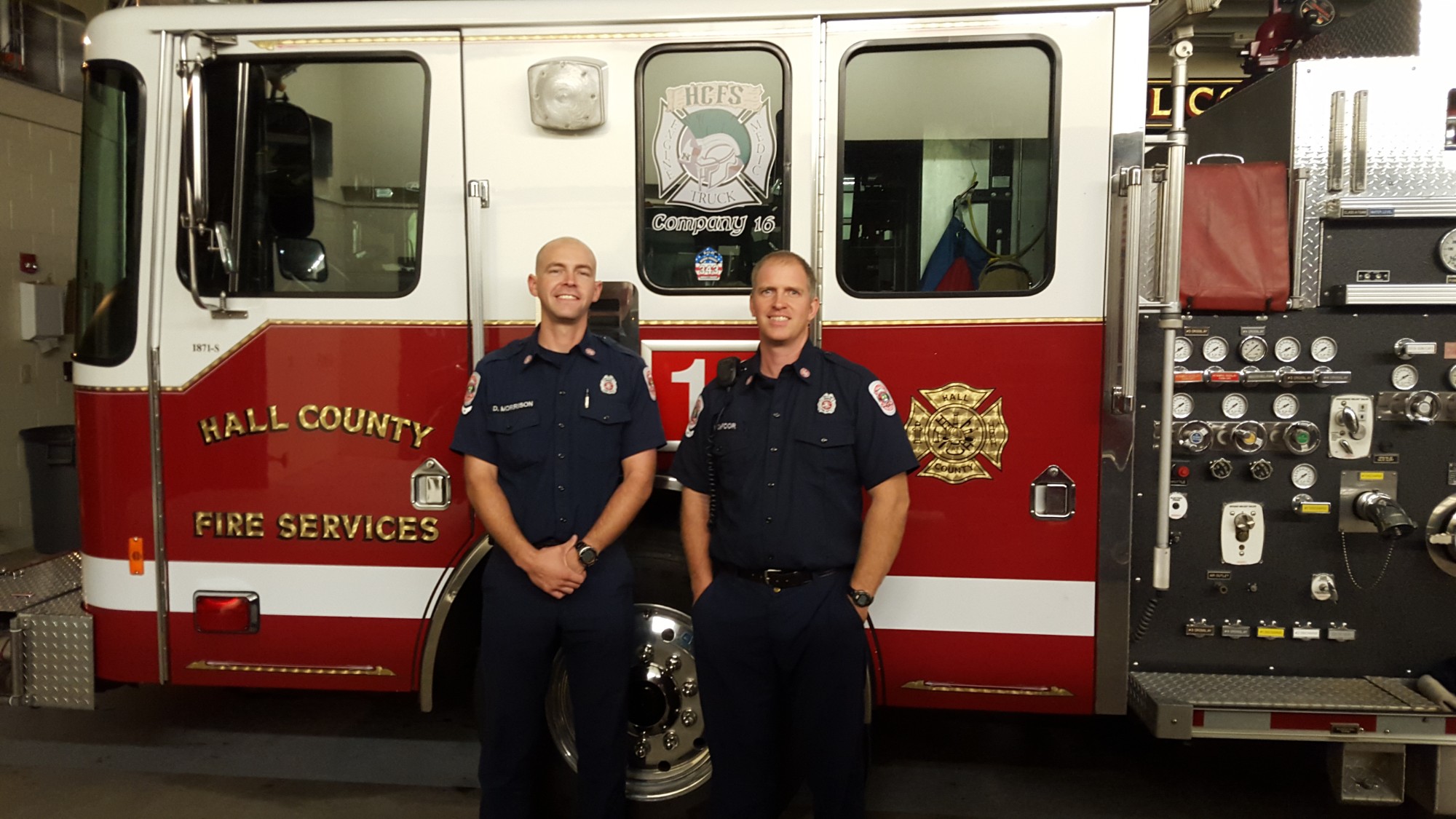
Long before GrowMesh and the AI work I’m doing now, I was a firefighter.
Firefighting is one of the clearest examples I know of a profession that cannot be learned from information alone. The manuals exist and the procedures are written down, but understanding how a building is behaving or recognizing when conditions have changed comes largely from experience.
A senior firefighter notices something a rookie did not notice and points it out. Eventually, the rookie begins seeing it too.
Our department went through a period when a significant amount of senior experience left within a relatively short time. The old mentorship structure suddenly had fewer mentors.
The organization had to adapt. Training became more deliberate, and knowledge that had once transferred informally by working beside experienced firefighters had to be intentionally built into the training process.
We did not recreate the old system. We changed how knowledge was transferred.
That is the part of the experience that feels relevant now.
The trades already understand the knowledge cliff
Construction and manufacturing have been dealing with this problem for years.
In construction, a large share of the workforce is approaching retirement. What leaves with those workers is not just labor. It is experience—the ability to recognize a problem before it becomes obvious.
Some companies have responded by deliberately rebuilding apprenticeship and training systems. Siemens, for example, has used multi-year apprenticeship programs that combine classroom education with thousands of hours working alongside experienced employees.
The important point is not the specific program. It is that knowledge transfer is being treated as something that has to be designed, not something that can simply be assumed.
Mike Rowe's mikeroweWORKS Foundation has also spent years drawing attention to the skilled-labor and training gap. The trades at least recognize the problem. There are apprenticeship programs, scholarships and a broader conversation about what happens when experienced workers leave without enough people coming behind them.
White-collar industries may now be approaching their own version of the same problem.
And AI could accelerate it.
White-collar work has tacit knowledge too
We tend to think of the knowledge cliff as a blue-collar problem because everyone understands that you cannot become an experienced welder or firefighter just by reading a manual.
White-collar knowledge appears easier to capture. It lives in documents, policies, databases and software.
But that is only part of the knowledge.
A patent attorney can know the law and still need years to develop professional judgment. An engineer can understand the calculations and still not recognize the downstream consequence of a seemingly small decision.
That is tacit knowledge: the things experienced people recognize because they have seen enough situations to know what matters.
The trades have always understood this. White-collar work has it too.
That creates a strange paradox. The better AI becomes at junior work, the less junior work people may actually have to perform. But if that work was part of how they developed judgment, we need to ask a different question:
Where will the next generation of experienced people come from?
This is a knowledge-loss problem
This is where I think the discussion about AI needs to become more precise.
AI will change jobs. Some tasks will disappear and others will change. But the more interesting issue is what happens to knowledge while that transition takes place.
Every organization has people who know things that are difficult to put into a procedure. They understand why a process works the way it does. They recognize unusual situations. They know when something technically meets the requirements but still does not look right.
We usually call that experience.
Experience is really accumulated judgment.
Historically, much of that judgment transferred through the work itself. A junior employee handled a task. Someone experienced reviewed it. A mistake led to a conversation. An unusual situation became a lesson.
Over time, knowledge moved from one person to another almost invisibly.
AI can interrupt that process without anyone noticing.
An organization may become more productive while becoming worse at transferring its own knowledge.
That is the risk.
Productivity can hide the problem
Imagine AI allows a team to produce significantly more work with the same number of people.
That is easy to measure.
What is harder to measure is whether the younger employees on that team are developing judgment at the same rate they were before.
If AI catches a mistake before a senior employee ever sees it, the work improves—but a teaching moment may disappear.
If AI creates the first draft every time, the employee may become very good at reviewing AI output without ever developing the same ability to build the work from scratch.
That does not mean AI should not be used.
It means productivity cannot be the only measurement.
Organizations should also be asking whether expertise is still being created.
AI can also help solve the problem
The interesting part is that AI could become part of the solution.
Most AI systems are currently optimized to give us the answer as quickly as possible. A good teacher does something different.
Sometimes a teacher asks what you think first. They question your reasoning, point out what you missed, and make you solve a similar problem again.
AI could do that too.
Instead of simply producing finished work, an AI system could identify the important judgment calls, explain why they matter, test the employee's understanding, and gradually provide less help as that person's ability improves.
AI could also help capture knowledge from experienced employees. Instead of simply asking someone to document a process, AI could help interview them about exceptions, unusual situations and past failures—the things that often contain the most valuable knowledge.
Used this way, AI could make knowledge transfer more deliberate than it has ever been.
But that will only happen if we recognize knowledge transfer as a problem worth designing for.
Look at your own industry
Every industry will have its own version of this.
The specifics matter less than the underlying question:
How does someone become experienced here?
Who are the people in your organization whose judgment holds the work together? What do they know that is not written down? How did they learn it? Which of the tasks that taught them are now being handed to AI?
And most importantly:
How will the next person learn what they know?
Those are not anti-AI questions.
They are AI implementation questions.
The organizations that recognize this early may gain something more valuable than productivity. They may learn how to use AI while preserving—and potentially accelerating—the development of human expertise.
Producing the work and learning the work are not the same thing.
As AI becomes better at the first, every industry needs to start thinking much more seriously about the second.
Sources
- NBER: Does AI Assistance Enhance or Erode Expertise? Evidence from a Three-Month Field Experiment in Patent Drafting
- NCCER: Construction workforce and apprenticeship research
- mikeroweWORKS Foundation
- Siemens apprenticeship program research
About Nathan DeFoor
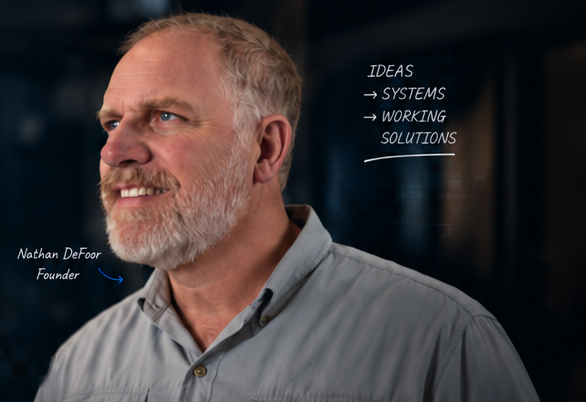
Nathan DeFoor is an entrepreneur and builder whose path has taken him from the fire service to co-founding GrowMesh, a vertical growing system, and now into building with AI. He also publishes The DeFoor Report, covering AI, technology, business and how these changes are shaping the way people work. AI has dramatically accelerated his output, compressing the time between an idea and a working product in a way that was previously difficult to imagine.